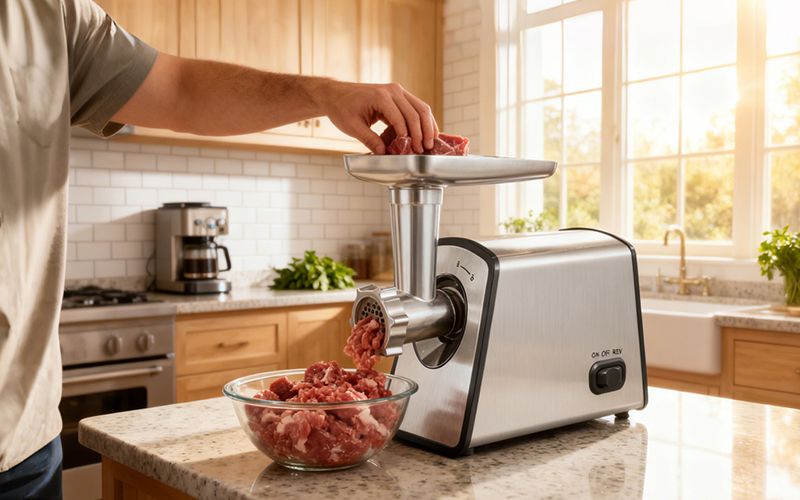
While it’s possible to grind meat in a food processor, or even to chop it by hand, a dedicated meat grinder is your best option if you plan on grinding meat on a regular basis. Here’s a basic guide on how to use and maintain your grinder.
Meat Grinder Parts
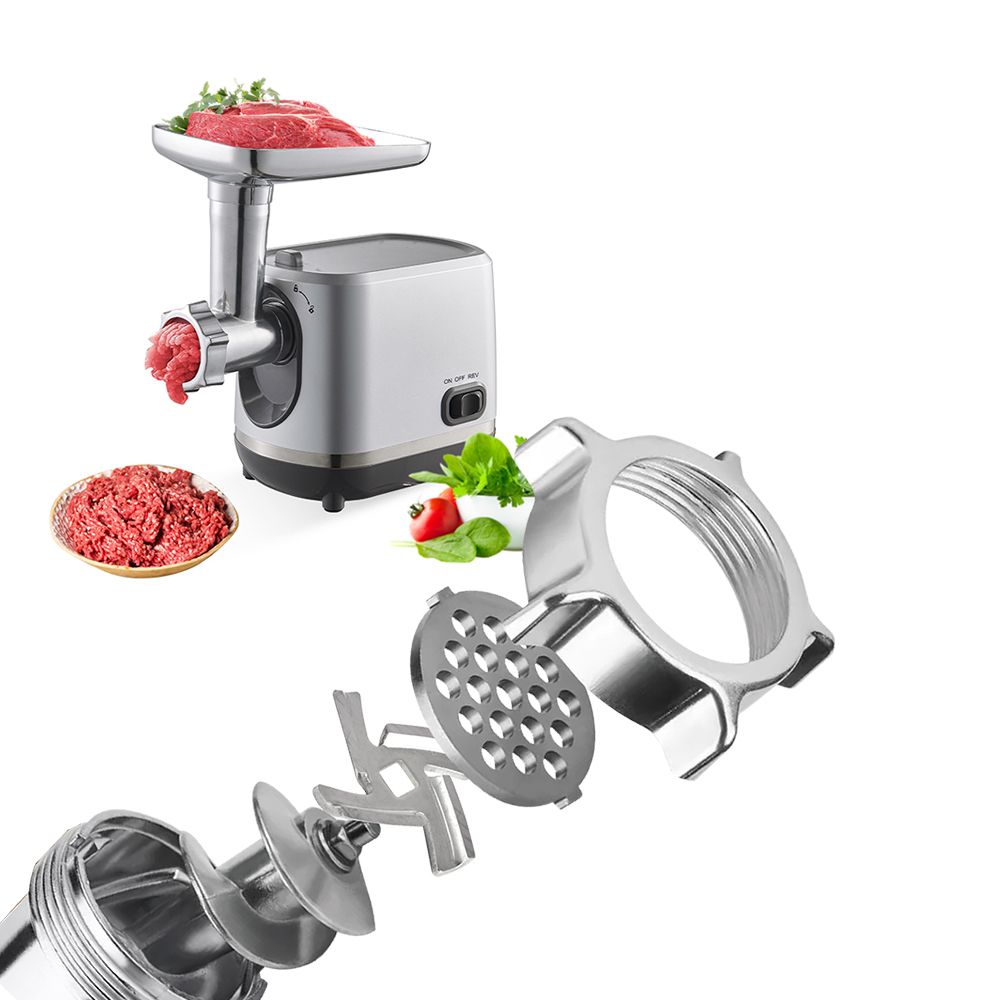
- The pusher and hopper are where you add cubes of meat. The pusher is used to force the meat down the feed tube and to keep things moving. Usually, there’s a tray located on top of the feed tube, where extra meat can be stored before being pushed into the grinder. The larger this tray, the more convenient it is to grind larger batches of meat.
- The screw is the main working part of the grinder. It steadily pushes meat down the shaft and toward the blades.
- The blade and plate are what do the actual grinding. The blade is a small, cross-shaped piece with a sharp edge on each arm that rotates against the plate (also called the die). The plate is a flat piece of metal with holes cut into it. As the screw forces the meat into this hole, the blade cuts it into a fine mince. The size of the holes determines the fineness of the final grind.
- The cover is used to keep the blade and plate in place as the blade chops.
How to Use and Care for Your Meat Grinder
There’s really not much to it when it comes to using a meat grinder. Basically, all you’ve got to do is assemble the grinder with the plate you desire; feed your trimmed meat (grinders hate sinew and connective tissues, so make sure to trim it all out) into the hopper; turn on the grinder.
That said, there are a few things to keep in mind while grinding:
- Keep everything cold. This is the single most important thing when you’re grinding. Warm meat will smear, the fat will leak out, and it will come out with a cooked texture similar to that of papier-mâché—pulpy and dry. Place the grinder and all of its parts in the freezer for at least one hour before grinding (I keep mine stored in the freezer all the time), and keep your meat well chilled right up until you’re ready to grind. If you’re making sausage that will require several grinds, grind the meat into a bowl placed inside another bowl filled with ice, in order to keep it chilled throughout.
- Trim your meat well. Smearing is most often caused by bits of sinew that get caught around the blade. Rather than chopping meat, you end up smooshing it through the holes on the plate, giving you a chewed-up texture. Trimming your meat well will help prevent this.
- Watch for smearing. Keep an eye on the meat as it comes out of the grinder. Ideally, it’ll come out of each hole in discrete little pieces. You should be able to clearly identify fat and meat. If it starts coming out as one mass, looks wet, and collects on the surface of the die, you’re in trouble. If your grinder has a reverse function, use it and see if it fixes itself. Otherwise, disassemble the mechanism, clean the blade, and start over.
- Keep your blade sharp. The blade is the only part of your grinder that should ever need much care or attention. A dull blade will smear meat. Luckily, the blade and plate should actually get better and better with repeated use. The metal grinds down microscopically each time you use it, so the contact between the blade and the plate should get tighter and tighter. Nothing grinds as smoothly as a well-cared-for, well-used grinder. You will occasionally need to get your blades resharpened if they’ve gotten way too dull. Once a year or so for a moderately well-used grinder is more than enough. Or, simply buy a few replacement blades. They can usually be had for a few bucks.

Meat Grinder FAQs
- Frequently asked questions about meat grinders can provide quick answers to common queries.
- Consider consulting the manufacturer’s website or online resources for FAQs and troubleshooting guides.
- Common questions may include topics such as maintenance, safety, and usage.
- Refer to the FAQs for quick solutions to common issues or concerns.
Meat Grinder Buying Guide
- A comprehensive buying guide can provide valuable insights and recommendations for selecting a meat grinder.
- Consider factors such as grinding capacity, ease of cleaning, and additional features.
- Research different models, and read reviews from experts and users.
- Use this information to make an informed decision when selecting a meat grinder.
Meat Grinder Usage and Tips
- Proper usage and tips can enhance the performance and longevity of a meat grinder.
- Consider the type of meat being ground, as well as the desired texture and consistency.
- Use the correct grinding plates and attachments for the specific task.
- Refer to the manufacturer’s instructions for specific usage and tips.